03Enterprise
How do you modernise a platform that professionals depend on daily — without ever letting them feel the change?
Research & Workflow Platform — ArdentCode · Wolters Kluwer
01 — Problem
Wolters Kluwer is a Fortune 500 company whose software sits on the desk of tax lawyers, accountants and compliance teams. When I joined ArdentCode, I inherited a codebase that had grown through years of accumulated decisions, written in AngularJS, serving users who could not afford a single bad morning. The business problem was blunt: the platform had to be modernised, but the people paying for it had built their daily routines around exactly how it behaved. Any change they could feel was a change they would escalate. So the real challenge was not technical debt. It was moving a live, regulation heavy system to a new stack while thousands of professionals kept working inside it, never noticing the floor was being replaced under their feet.
02 — Constraints
- Regulatory domain — incorrect UI is not a UX problem, it is a compliance risk
- US and European product lines with divergent legal requirements sharing a core architecture
- Long-tenured users with established workflows — every interaction change had to be justified and gradual
03 — Architecture
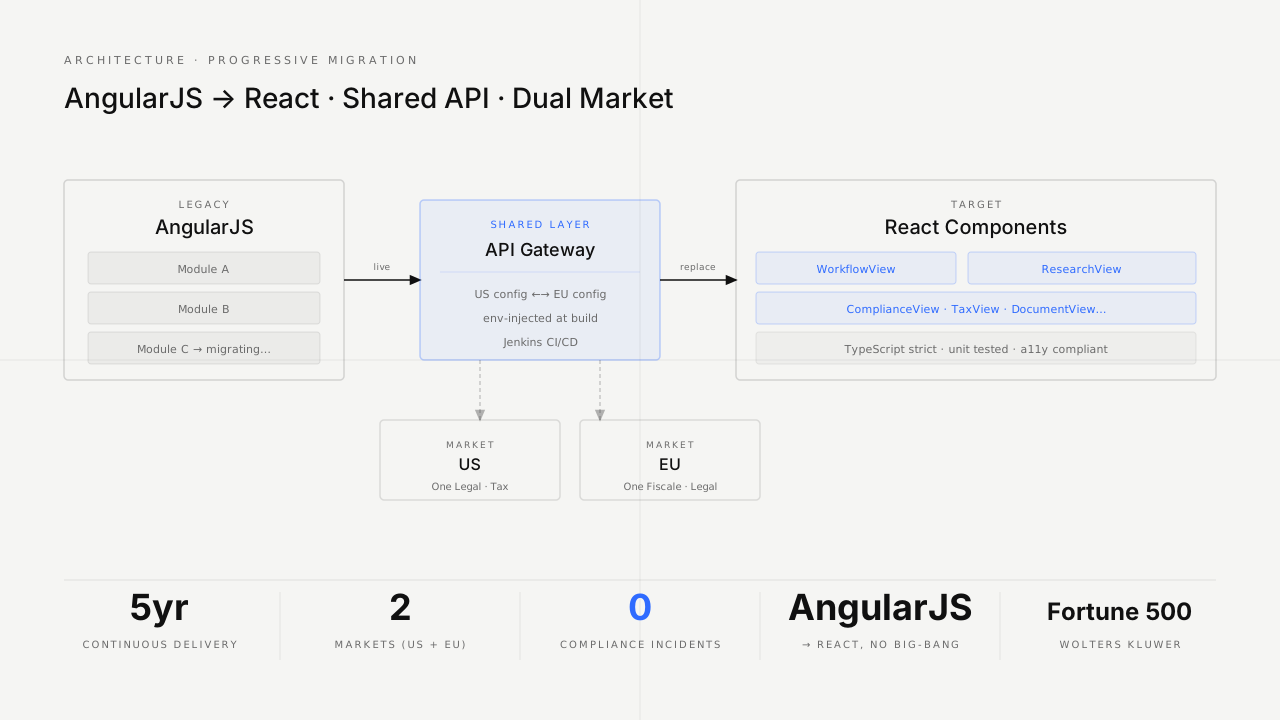
A hybrid migration — AngularJS modules were progressively replaced with React components sharing the same data layer, so both ran in production simultaneously without a big-bang rewrite. A shared API layer abstracted US and EU product differences so the frontend remained consistent. Jenkins pipelines enforced deployments across both markets with environment-specific configuration injected at build time.
04 — Solution
I led the incremental migration from AngularJS to React, one module at a time, with both frameworks running in production against the same data layer so there was never a big bang moment that could fail. I sat in requirement sessions directly with Wolters Kluwer product teams from the US and Europe, translated regulatory constraints into interface decisions, and defended the habits of long tenured users whenever a redesign would have been technically cleaner but humanly worse. The hardest problems were rarely code. They were sequencing: deciding which module could move next without breaking a workflow someone in a law office depended on that same week. Over five years I grew from executing tickets to setting the frontend direction for the team.
- Software Engineer → Senior Frontend Lead
- Frontend architecture across React and AngularJS codebases
- Client-facing requirements, solution design and delivery